CRUCIAL featured in Independent article
Super El Nino: If you think it’s hot now, time to brace for what is coming next
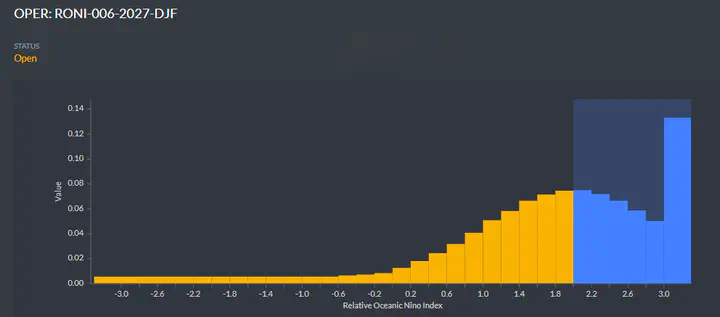
In an article published in The Independent, Helen Coffey features Mark Roulston and CRUCIAL in the article subtitled ‘After May’s soaring temperatures, experts warn this heatwave could be just the beginning.’
Extract below. For the full article, follow the link.
What tips an El Nino into “super” territory is all to do with water temperature. “If sea surface temperatures there are more than 0.5C above normal for the time of year, we say that those are El Nino conditions,” according to Mark Roulston, senior research fellow and director of operations for Lancaster University.s Climate Risk and Uncertainty Collective Intelligence Aggregation Laboratory (CRUCIAL).
“A ‘Super El Nino’ is often defined as when these temperatures are more than 2C above normal for the time of year, so a more extreme version of the El Nino phenomenon.”
Ocean warming has been rapid over the past few weeks and is expected to continue over the next few months, peaking in autumn. While El Nino conditions can sometimes last for as long as 18 months, the more extreme conditions associated with a Super El Nino tend to be shorter-lived, more in the region of two to four months.
CRUCIAL’s predictions currently indicate that there is a more than 85 per cent chance of El Nino conditions prevailing during the upcoming winter (December, January and February), and around a 45 per cent chance that the conditions will be extreme enough to be classed as a Super El Nino.
…
There is growing confidence from scientists that this potential El Nino could be notably strong.
“My personal opinion is that we will see the 2.5C threshold broken, and may even approach 3C — challenging the strongest El Nino on record in 1877-8,” advises Professor McGuire.
The effects of El Nino events are exacerbated further by an ever-warming planet, compounding the impacts of climate change. Super variants can have such a huge warming effect that temperatures for many years following are notably cooler. This has been used as “evidence” by some climate change deniers in the past; for example, after the 1997-8 Super El Nino, global temperatures didn’t reach the same level until 2014, “which caused some people to declare that global warming was over,” explains Roulston.
…
“If we have another Super El Nino the same thing is likely to occur, with subsequent years being cooler than the spike associated with the event,” Roulston adds. “I have no doubt that again some people will argue this means global warming has stopped, but it’s a statistical illusion caused by picking a record year as your baseline.”
…
Link to full article at The Independent.